Every person that has actually handled a plant, a laboratory, or a busy maintenance shop has heard the exact same problem: handwear covers are anywhere, yet never ever where you require them. You acquire them by the pallet, you throw them away by the pallet, and someplace in the center they fall short when someone cuts an edge on sizing or wearing. The conversation regarding PPE Gloves tends to orbit around cost and compliance, yet the genuine chance beings in just how we shepherd gloves through their entire lifecycle. That indicates choosing the best kind in advance, training for proper use, building trustworthy glove cleaning process where it is risk-free to do so, and closing the loophole with responsible end-of-life pathways, including PPE gloves recycling where practical. Do this well and you lower injuries, reduce waste, and frequently save actual cash. Do it badly and you pay two times: as soon as in consumables, again in downtime, events, and regulatory risk.
I have spent adequate time on manufacturing floorings and in cleanrooms to know there is no global dish. A nitrile handwear cover in a Class 100 environment is a different animal than a cut-resistant knit handwear cover in a fab shop. A glove that can be cleansed and redeployed in a logistics facility may require to be retired immediately in a food plant to stop cross-contamination. The pattern that functions is not an SOP template, it is a lifecycle mindset.
Where the lifecycle starts: choice forms everything downstream
Glove selection is the keystone. When you devote to a product and layout, you established the borders for cleaning up options, sensory feel, chemical resistance, and recycling potential.
In a pharmaceutical suite, non reusable nitrile and neoprene policy for a factor. They offer reliable obstacle properties, regular fit, and traceability. They additionally have a tendency to be solitary usage in crucial zones. The lifecycle below is short and standardized for Cross-contamination avoidance. On a machining line, durable nitrile or PU-coated knits offer tactile control and abrasion resistance. These often tolerate glove cleaning, which unlocks to numerous uses and a much longer lifespan. In vehicle assembly, I have actually seen cut degree A3 or A5 gloves go through 3 to five clean cycles prior to the grasp layer wears thin. When groups understand that handwear covers will certainly be cleaned up and returned, they treat them with the very same regard as a calibrated tool, not a disposable rag.
Sizing issues more than many people admit. If you stock three dimensions when you need six, your drivers will certainly double handwear cover, stretch cuffs, or reduce fingertips for mastery, each of which eliminates protection and complicates cleansing. A 10 percent renovation in sizing accuracy typically reduces consumption by 15 to 25 percent, based upon intake audits I have actually run in plants with 100 to 500 operators. Those financial savings surge via the lifecycle.
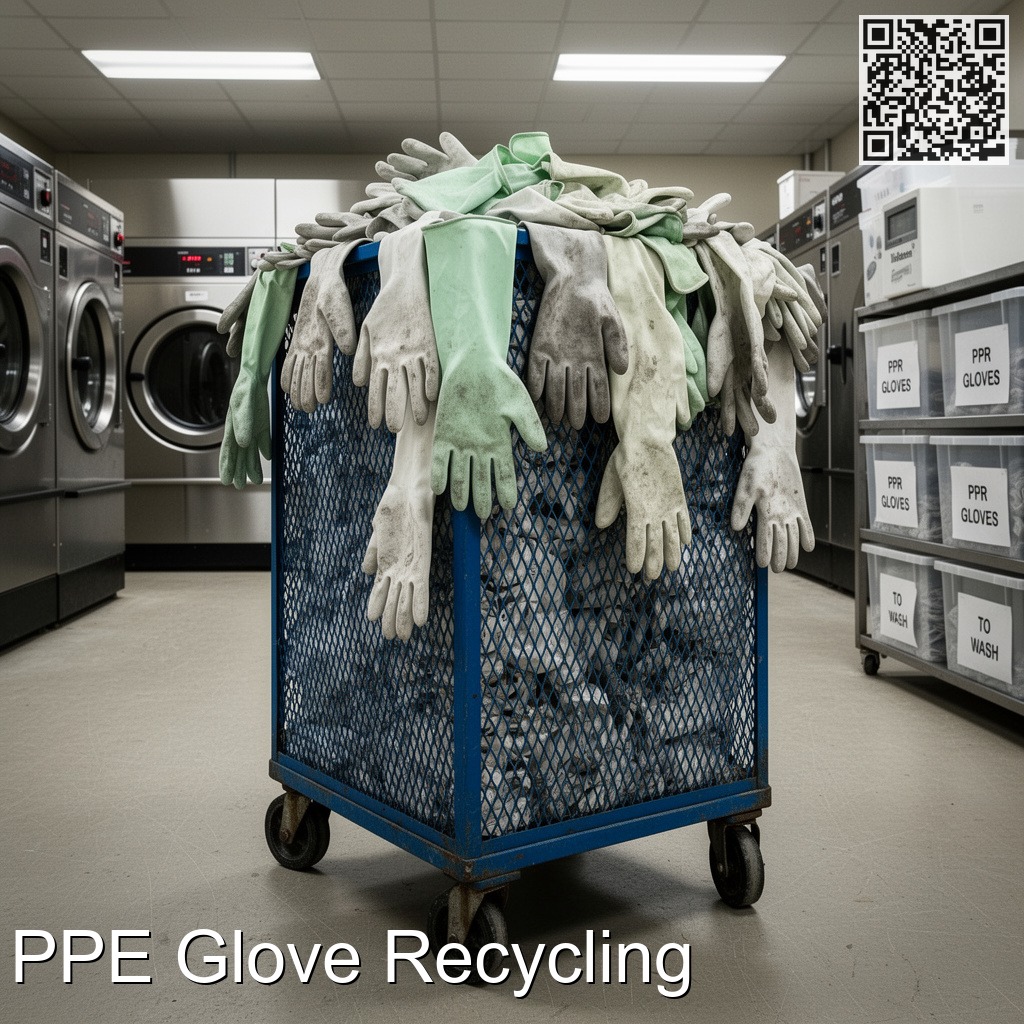
Finally, plan ahead to recycling. If PPE gloves recycling is a target, avoid mixing numerous products at the factor of usage, and avoid adhesives or labels that make complex downstream sorting. The simpler you make segregation at the source, the cleaner your recycling stream and the greater the yield.
Safe use in the genuine world
Training is the difficult part due to the fact that it requires to stick also on a hectic Tuesday after lunch. The 3 adoption levers are easy: make it noticeable, make it convenient, make it accountable.
Visibility means uploading the actual glove design and size per job at the workstation, not a generic plan on a breakroom wall. Convenience ways dispensers at the factor of use, with clear bins for soiled handwear covers if you run a cleaning program. Responsibility indicates supervisors who spot check for the telltales: frayed cuffs, chemical staining, grip layer worn smooth. In managed settings, it additionally suggests set monitoring. A barcode on a handwear cover bag that connects to a whole lot number satisfies auditors and aids you pull supply when an issue notification hits.
Cross-contamination prevention belongs below, not as an explanation. Handwear covers end up being cars. In food handling, the classic error is putting on the exact same glove to manage raw product and to run shared controls. In labs, it is changing safety glasses or answering a phone with gloved hands. You do not need posters to fix this, you need basic actions regulations that are reinforced in the workflow: gloves for item get in touch with just, bare hands for shared surface areas, fresh handwear covers after breaks. Where cleansing is viable, you impose a clean-return bin for each and every area to maintain workstreams separate.
The honest talk about cleaning
Glove cleaning is either a solid lever for price and ecological effect or a tough no, relying on the danger profile. If biological contamination, cytotoxic drugs, allergens, or food-contact sterility are in play, the default is single usage and prompt disposal per your center's waste strategy. That is non-negotiable. Outside those zones, particularly for mechanical risks, oils, and non-hazardous soils, an organized cleansing program can expand handwear cover life two to ten cycles.
When we stood a cleansing program at a Tier 2 automobile distributor, we started decently. Operators used A4 cut-resistant knits with a nitrile micro-foam hand. Ordinary day-to-day problem was 1.6 sets per person. After a pilot with regular collection, commercial laundering, examination, and redistribution, the concern rate fell to 0.6 pairs. Not everyone enjoyed the feel of laundered gloves. Some dimensions wore out quicker. But the program paid for itself in month three and halved handwear cover waste by weight.
The details make or damage it. Unclean handwear covers need to be captured before they spread. Collection bins need to be labeled by handwear cover type and location. If you blend 3 glove households in one bag, your assessment and arranging workload dives and the incorrect gloves return to the wrong task. For laundering, pick companions that comprehend PPE fibers and finishings. Water temperature level, pH, and frustration must protect cut thread stability and coating hold. Ask for test runs on your precise handwear cover design and for wear information after each cycle. We found 5 cycles was the helpful restriction for that micro-foam grasp prior to slip events increased in stormy problems at the dock. Various other designs hold up longer.
Inspection is not a brief glance. You are searching for micro-cuts at the crease in between thumb and index, delamination of the finish at the heel of the hand, and overstretched cuffs that won't anchor under a sleeve. A decline bin is not a failure, it is your control device to maintain the cleaned pool high quality.
Data, not vibes: determining ROI with an easy model
Leadership will certainly ask for evidence. An ROI calculator assists you validate handwear cover cleansing and reusing programs with practical inputs. I like an ordinary spreadsheet with a few levers:
- Baseline glove intake per worker each week, by handwear cover kind and size mix. Unit cost per handwear cover, consisting of freight. Cleaning cycle return: what percent of gathered gloves survive evaluation and the number of times they can be cleansed prior to retirement. Cleaning price per pair, consisting of transportation, laundering, sorting, and loss. Incident price evasion, if appropriate: for example, fewer slips or lacerations as a result of better handwear cover schedule or fit. Waste disposal expense per pound or per bin.
Keep presumptions traditional at first. If your baseline consumption is 80 sets per worker each year and cleansing returns 3 reuse cycles at 60 percent survival, you could cut new acquisitions by roughly a 3rd. If brand-new handwear covers are 3.20 bucks per set, cleaning prices 0.75, and disposal costs 0.20 per pair, you can sketch annual cost savings with unusual self-confidence. Include an Ecological duty column to the exact same design that estimates waste diverted and CO2e reductions from stayed clear of production. Your sustainability team will certainly aid with the factors.
The main trap with ROI exercises is disregarding program rubbing. Construct in a management cost line and a 5 to 10 percent attrition presumption for missing returns. If you still clear your obstacle price, you likely have a solid case.
Industrial health and the borders of cleaning
Some risks do not care about your savings. If gloves have noticeable leaks, ingrained metal shards, or chemical permeation beyond product specs, do unclean them. Retire them promptly. For chemicals, rely upon the product's permeation information. When a handwear cover has been exposed to focus or periods that approach breakthrough times, it relocates to the waste stream. When unsure, ask your industrial hygienist to write the boundary conditions in your SOP.
It is just as crucial to specify where glove cleansing stops even if the dirt is benign. If the price to accumulate, transport, and kind surpasses the worth of a new handwear cover, you are better off boosting use-phase habits rather. I have actually seen programs chase cents and burn hours. A quick time study will stop that.
Recycling choices and the circular economy model
Recycling non reusable gloves is not as uncomplicated as tossing a bottle into a blue bin. The value formula changes with product kind, contamination threat, and neighborhood framework. Nitrile and some latex handwear covers can be recycled when they are not polluted with biohazards or controlled chemicals. The method is keeping a clean stream and having a downstream converter who desires that polymer.
A round economy design for gloves looks like this: segregate, consolidate, process, and renewal. You segregate by handwear cover material at the point of usage. You settle in lined boxes with weight monitoring and contamination checks. A recycler gets the loads, shreds and washes the product, then compounds it right into pellets or crumb that feed mats, composite lumber, or injection formed components. It is not an unlimited loophole back right into handwear covers, a minimum of not today, however it is a value-preserving loop.
Third-party professionals help you stitch this together. Libra PPE Recycling is one instance of a partner concentrated on PPE gloves recycling and other PPE product streams. The factor to think about a solution like this is not only land fill diversion. They bring logistics, traceability, and contamination procedures you would certainly have a hard time to establish internal. They will additionally inform you openly when a stream is not viable. I appreciate that frankness since it keeps the program credible.
Expect some administrative lift. You will need to educate groups on what enters into the recycling box and what does not. You might require photo-based spot checks or light audits to keep the stream clean. If the reusing vendor denies loads as a result of contamination, your business economics will certainly suffer. Start with a pilot location and increase just when your contamination price is constantly under the vendor's limit, commonly around 5 percent by weight.
Designing the operations: from dispenser to dock to destination
When we map glove circulations, we start at the terminal, not the dock. The less steps in between a worker and the ideal glove, the reduced your misuse. For multiple-use handwear covers, the least steps in between an employee and the return bin, the higher your recovery rate.
Bins must be sized to the turnover, not to the area you occur to have. Overflow brings about blending and contamination. Shade coding jobs, yet only if you keep it regular throughout the site. I have seen plants shade code by division in one building and by product in another. That ensures errors when teams drift in between locations. Pick one plan that matches your waste vendor's categories.
Transport tempo should match soil lots. Oily handwear covers that sit a week will certainly smell and can degrade. High-turn areas gain from twice-weekly pick-ups even if the containers are not complete. Your cleaning supplier will certainly provide you a route plan. If you run internal cleaning, treat it like a micro-laundry with clear splitting up between inbound stained, laundry, examination, and outgoing tidy hosting. Cross-traffic in between unclean and clean areas is the fastest method to mess up confidence in the program.
Quality control: what to inspect, and what to measure
Tracking just extra pounds diverted conceals the signal. Helpful metrics connect back to safety and security and operations.
I like to watch four numbers. First, glove-related event rates by job. If a person obtains a small cut because a glove finishing lost grip, you would like to know within the week so you can readjust your cleaning cycles. 2nd, fit conformity audits. Random checks will certainly tell you whether operators located their size in the cleaned up pool. Third, stock turns for new handwear covers. The objective is less regarding stockouts and more about whether your program lets you bring less boxes without threat. 4th, reusing contamination price, by area. If one line maintains dumping incorrect product into the recycling box, re-training there is a better repair than tightening regulations for everyone.
On the cleaning side, your inspection decline codes are gold. Develop a list of reasons: cut, abrasion, layer wear, contamination, mismatch, and various other. After a month, patterns emerge. If 40 percent of rejects are finish wear at the palm heel, perhaps the job surface structure or material changed. If cuts concentrate at the thumb crotch, a job redesign or different cut degree can be in order.
The human part: fostering, friction, pride
Any program that touches individuals's hands will certainly generate point of views. You will certainly hear that washed handwear covers really feel stiffer, that package positioning is incorrect, that dimension tools disappeared once more. Treat these as process signals, not issues to be dismissed.
We ran a basic workout with an upkeep crew: for 2 weeks, each person marked their cleaned gloves with a discreet dot by cycle number. The crew started contrasting notes. A few revolved tasks to see where gloves wore faster. The conversation altered from "these handwear covers are bad" to "cycle three really feels fine for electric panels, but not for the compressor space" and "we require more smalls in the Monday bin." When drivers own the monitorings, you gain sturdy adoption.
Recognition matters too. A team that keeps reusing contamination under 2 percent for a quarter, or a line that drops glove usage by 30 percent without events, should have greater than a shrug. A https://blogfreely.net/nirneywmgg/ecological-responsibility-in-ppe-from-policy-to-practice small reward or a shout-out in the procedures huddle strengthens that your Environmental duty goals are a common achievement, not a business memo.
Compliance and paperwork without the paper swamp
Documentation should serve operations first, audits secondly. Keep SOPs short, details, and job-based. Usage photos where they help. If you run a handwear cover cleansing program, record the collection steps, the laundering parameters, the inspection standards, and the reject handling. For recyclers, keep manifests, weight tickets, and contamination notifications. If you make use of a supplier like Libra PPE Recycling, integrate their reporting into your sustainability dashboards so you do not dual go into data.
For medical, food, and pharma, be accurate concerning areas where cleaning is banned. Mark containers clearly so an auditor can stand in a space and see compliance with the naked eye. You will certainly sleep far better when the examiner arrives.
Cost, carbon, and trade-offs
There is a genuine carbon cost embedded in PPE. Production a pair of nitrile handwear covers has a little impact per unit, but a large one at scale. Multiply across a health center network or a production university and you are considering truckloads of product and discharges. Programs that lower use or expand life supply a quantifiable CO2e advantage. That stated, do not go after carbon at the cost of safety or health. A single hand injury or contamination occasion can wipe out the gains from a year of mindful recycling.
Trade-offs appear in weird areas. Much heavier handwear covers might last much longer yet decrease mastery and slow-moving job. A better layer may grip much better however dropped micro-particles not appropriate for clean locations. Reusing boxes put as well near to the line can crowd egress courses. Treat each trade-off with a fast risk evaluation and an experiment. Pilot, step, adjust.
Bringing it with each other: a practical path forward
Start by mapping your handwear cover community. Catalog handwear cover types, tasks, yearly volumes, device expenses, and any type of case data. Determine areas where solitary usage is mandatory and where reuse is possible. Select one or two high-volume, low-hazard locations to pilot glove cleaning. Define success metrics and a run time long enough to see patterns, normally 8 to 12 weeks.
In parallel, check out PPE gloves recycling for streams that fulfill your contamination restraints. Engage a partner early, share your handwear cover bill of materials, and ask for their contamination thresholds and packaging needs. Put the appropriate containers in the right places with basic on-bin directions. Maintain your scope slim up until your contamination prices stabilize.
Use an ROI calculator with clear inputs. Share the model with supervisors so they comprehend how their habits, like return rates and sorting top quality, affect the economics. Celebrate early wins publicly and deal with friction privately.
Finally, shut the loop with procurement. When your programs maintain, renegotiate handwear cover agreements with quantity rates that show lower acquisitions, or shift to models that consist of return credit report or bundled cleaning. Some vendors currently align with circular economic situation model goals and offer take-back or reusing assimilation as component of the supply contract. Utilize your data to safeguard terms that support the lifecycle you built.
A brief area checklist for new programs
- Clarify which locations allow handwear cover cleaning and which call for single-use disposal, and blog post that advice at the factor of use. Standardize handwear cover designs and size ranges per task to streamline cleaning, assessment, and redistribution. Set up labeled collection bins for dirtied handwear covers and, where relevant, different recycling boxes with clear contamination rules. Select a cleansing or recycling companion with documented procedures, test runs, and coverage, and agree on high quality limits prior to launch. Track four metrics once a week: consumption per worker, assessment deny factors, occurrence rates tied to glove efficiency, and reusing contamination rate.
The lifecycle of PPE Gloves is not extravagant, but it is a lever you can pull to improve safety, decrease waste, and keep budgets in line. Deal with gloves as assets moving via phases instead of consumables to shed via. With thoughtful choice, disciplined glove cleansing where it fits, and wise PPE gloves recycling in the right streams, you build a system that collaborates with your individuals, not versus them. That is what stewardship looks like on a shop floor, in a lab, or at a loading dock, one set of gloves at a time.
Libra Industries Inc
1435 N Blackstone St, Jackson, MI 49202
+15177875675
| Place ID | ChIJt_HMH44vPYgRNbiD22DpHYo |
| CID | 9952367353767639093 |
| Business Profile ID | 6301257705288912858 |
7H9Q+2G Jackson, Michigan
| Coordinates | 42.26760060, -84.41112540 |
 Ask ChatGPT
 Ask Grok
 Ask Perplexity
 Ask Claude
 Ask Google AI
 Ask You